Why 40GBASE-PSM4 Is Still Valuable in Modern Data Centers?
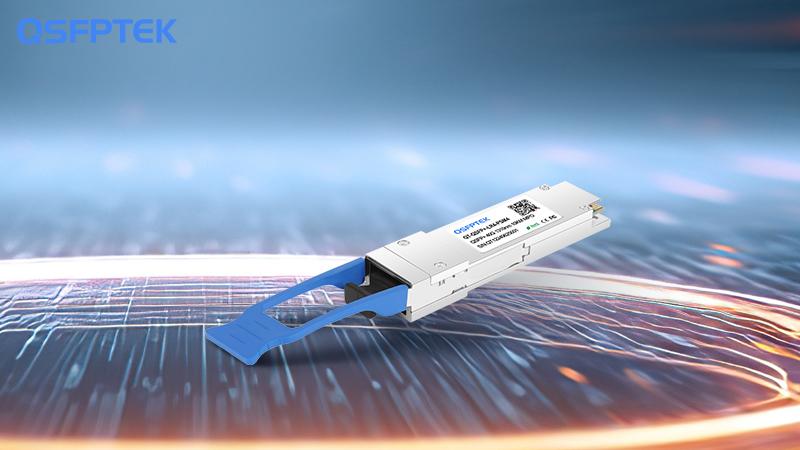
Even though data center networks are rapidly shifting toward 100G, 200G and even 400G architectures, 40G optical transceivers continue to play an important role in many environments. Among these, 40GBASE-PSM4 stands out due to its unique transmission characteristics and cost advantages in long-reach applications. Designed with parallel single-mode technology and operating at 1310nm over a distance of up to 10km, 40GBASE-PSM4 QSFP+ modules seem like a product from a previous generation. However, they remain highly relevant in modern data centers where cost optimization, backward compatibility, and stable performance are essential. Understanding why PSM4 continues to hold its value requires a closer look at the way today’s networks are built, expanded, and upgraded.
The Technical Foundation: Why PSM4 Remains Efficient
Parallel Optical Transmission and the 1310nm Advantage
40GBASE-PSM4 relies on four parallel optical lanes, each carrying a 10G signal over single-mode fiber. This architecture avoids the need for complex wavelength-division multiplexing, which is required in 40GBASE-LR4 modules. Instead of combining four wavelengths into one, PSM4 sends them directly through separate fibers. This design significantly simplifies the optical components inside the module, reducing costs and lowering the risk of performance degradation over time. The use of 1310nm DFB lasers also brings stability and distance capability that multimode-based modules cannot match. Although the module uses an MTP/MPO interface, its basic transmission mechanism remains straightforward, reliable, and easy to understand for network engineers.
Cost-Effectiveness in Long-Distance 40G Deployments
One of the most compelling reasons PSM4 continues to be valuable is its balance of cost and performance. Many data centers still rely on 10G server connections and 40G aggregation layers. For links that span between buildings, across large campuses, or within distributed spine-leaf architectures, PSM4 provides a long-range option at a significantly lower cost than LR4 modules. Because PSM4 avoids complex optical multiplexing components, manufacturers can often offer it at a more competitive price point. Moreover, when paired with existing single-mode cabling infrastructure, PSM4 enables operators to upgrade bandwidth without replacing fiber. This extends the lifespan of legacy cabling investments and minimizes deployment disruption, two factors that make PSM4 especially appealing to enterprise and cloud operators seeking controlled and predictable upgrade paths.
Compatibility with Existing Network Architectures
Seamless Integration in QSFP+ Systems
Despite the emergence of QSFP28, QSFP56, and QSFP-DD, a huge installed base of networking hardware still operates with QSFP+ ports. Switches, routers, and storage systems commonly deployed over the past decade continue to support QSFP+ interfaces, and many organizations are not yet ready for a complete infrastructure overhaul. For these environments, 40GBASE-PSM4 provides a long-distance, high-performance solution that fits seamlessly into current hardware. It allows data centers to expand or reconfigure their 40G layers without requiring new switch generations. As hybrid networks become more common—where part of the fabric runs at 40G and newer sections run at 100G—PSM4’s compatibility helps bridge the gap. In these situations, PSM4 can operate alongside 100G PSM4 or 100G DR solutions, creating a smooth and strategic evolution path.
Scaling and Migration Benefits
When upgrading from 10G to 40G or even toward 100G, many data centers find that their existing fiber infrastructure becomes a determining factor. Because 40GBASE-PSM4 uses eight fibers of a twelve-fiber MTP/MPO cable, it aligns well with structured cabling systems commonly installed in data centers over the last several years. This makes PSM4 an efficient choice for organizations looking for a cost-effective bandwidth increase without completely redesigning their fiber plant. Additionally, parallel single-mode transmission aligns well with the 100G PSM4 architecture, which also relies on a similar parallel approach. For operators planning a phased migration, PSM4 creates a practical stepping stone, allowing them to adopt higher-speed technologies at controlled intervals while maintaining stable performance across generations.
Performance Stability and Predictability
40GBASE-PSM4 offers strong performance consistency, especially in scenarios where long-reach transmission is crucial. The absence of complex WDM optics inside the module reduces the risk of degradation caused by temperature variations, component drift, or aging. This reliability is particularly valuable in distributed data centers or large campus networks that depend on predictable long-distance backbone links. In addition, PSM4’s straightforward parallel architecture tends to deliver consistent latency and low dispersion, further contributing to stable network behavior. In an era where data traffic continues to grow and applications become increasingly sensitive to performance fluctuations, having a simple and predictable optical path remains a major advantage.
PSM4 in the Context of Modern Data Center Strategies
Supporting Cloud, Edge, and Hybrid Environments
Although hyperscale operators are moving toward 100G and above, 40G still plays a critical role in many cloud and enterprise applications. A growing number of organizations are building hybrid infrastructures that mix cloud services, local data centers, and edge computing facilities. In these architectures, not every link requires 100G or 400G capacity. PSM4 is ideal for medium-to-long-distance connections between clusters, storage nodes, disaster recovery facilities, and multi-building campuses. Its predictable performance, low cost, and compatibility with legacy systems make it suitable for these diverse environments. As edge computing expands, many smaller facilities adopt 40G uplinks for aggregation, and PSM4 provides the capability to span several kilometers without expensive optical components.
Conclusion: A Mature but Still Valuable Technology
40GBASE-PSM4 remains valuable in modern data centers because it strikes a balance between cost, performance, simplicity, and compatibility. Its long-reach capability, reliance on standard single-mode fiber, and streamlined parallel optical design make it highly practical for organizations seeking stable and budget-friendly upgrades. Even as higher-speed technologies dominate the headlines, PSM4 continues to play a key role in many production environments. For data centers aiming for controlled expansion, multi-phase migration, or hybrid architectures, 40GBASE-PSM4 remains a reliable and strategic choice that delivers tangible value in today’s fast-evolving network landscape.